hobart cbd ·
David Jones is a warning. Is Hobart listening?
The changing retail landscape is a call for Hobart to plan ahead. By improving accessibility and supporting a diverse city centre, we can help local businesses thrive for generations to come.
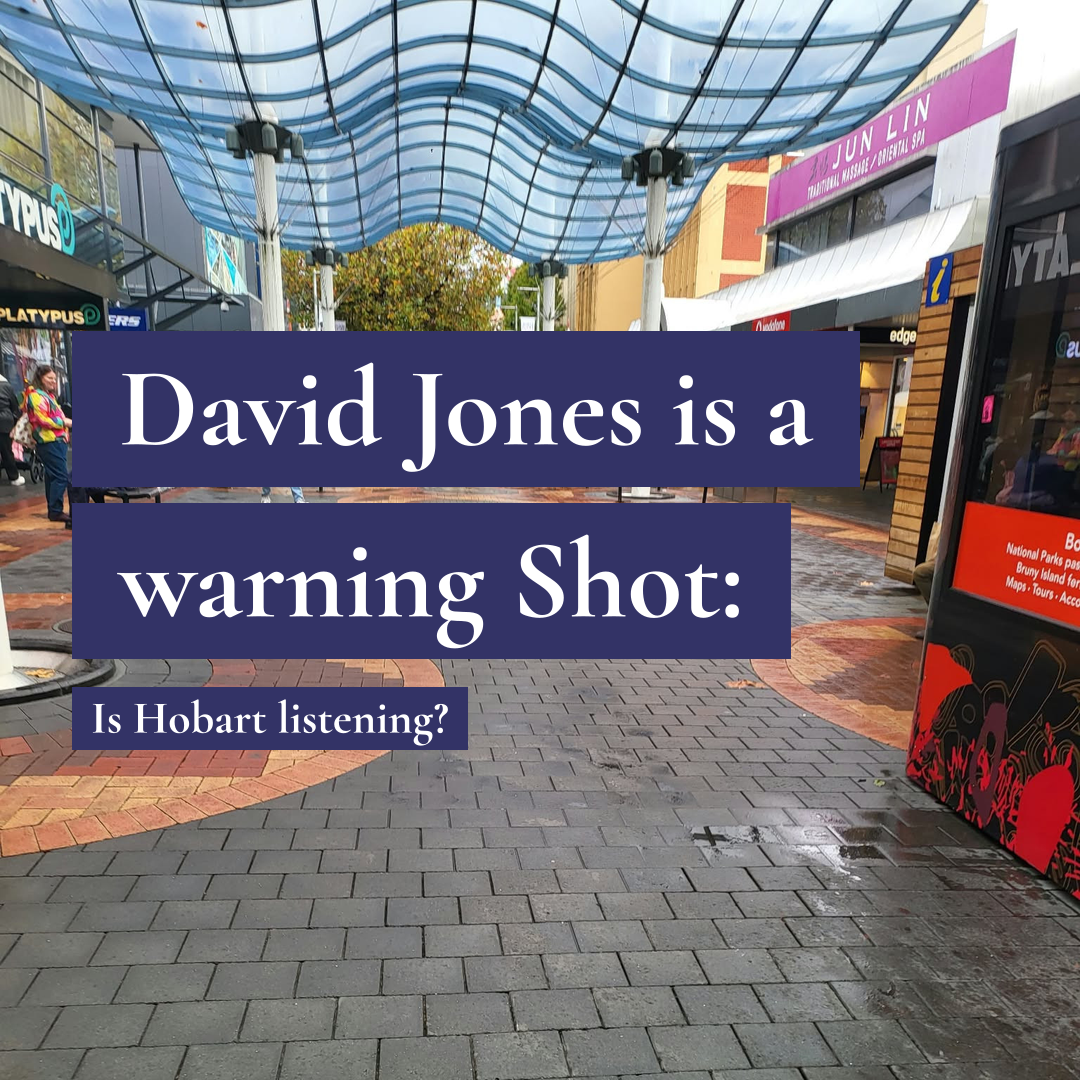
The announcement that David Jones will close half its stores should concern every Australian city, including Hobart. Not because our department stores are necessarily facing the same fate, but because the economics of retail have changed, and the consequences extend far beyond the shopfront.
For generations, department stores were the beating heart of our cities. They brought people into town, provided employment and supported the cafes, specialty shops and other businesses around them.
Today, the customer has changed. Online shopping offers convenience, suburban shopping centres provide easy access, and specialist retailers compete for customers who once relied on department stores for almost everything.
Meanwhile, operating a large retail business remains expensive. Staffing, rent, electricity, stockholding and maintaining substantial premises all come at a cost, regardless of how many customers walk through the doors.
Hobart is fortunate to retain both Myer and Target. They serve different markets and remain important parts of our retail landscape. Their contribution deserves recognition, not speculation about their future.
But the David Jones announcement should encourage us to examine the health of the wider environment in which they operate.
A recent analysis by Spectrum Analysis Australia, examining business activity between 2011 and 2025, found that retail business numbers in the Hobart and West Hobart catchment declined by 24.6%. Overall registered business numbers grew by just 7.5%, compared with 36.2% across five surrounding Greater Hobart catchments.
These figures deserve attention, although they measure business numbers rather than retail turnover.
There is encouraging news too. A recent Ray White Commercial survey recorded only 11 vacant premises among 233 street-front retail tenancies in Hobart's prime CBD shopping area. New and established retailers continue to invest.
So the picture is not one of inevitable decline. It is one of change, bringing both challenges and opportunities.
And that raises a question. Are we planning for the city people shop in today, or the one we remember from twenty years ago?
Retailers cannot control the cost of parking, public transport, street accessibility or the attractiveness of the surrounding public spaces. Yet all influence whether customers choose Hobart over suburban centres or the convenience of shopping from home.
For families purchasing larger items, accessible parking and convenient loading matter. For older residents and people with disabilities, safe and practical access is essential. For workers, a welcoming city offers reasons to shop before returning home.
These are not simply transport or planning questions. They are economic considerations.
We must also recognise that the future of our CBD cannot rest entirely on retail.
People need reasons to visit and remain in the city. Restaurants, cultural activities, entertainment, professional services, attractive public spaces and a strong employment base all contribute to the customers who sustain our shops.
Our large retail buildings must also remain adaptable. Changing consumer habits may eventually require different combinations of retail, services, workplaces and other activities within spaces originally designed for traditional department stores.
None of this means abandoning our established retailers. Quite the opposite. It means creating an environment where they, alongside smaller independent businesses, have every opportunity to succeed.
Hobart has tremendous advantages: its compact centre, historic buildings, distinctive businesses and cultural character. We should build upon those strengths while recognising that competition for customers is greater than ever.
David Jones reminds us that even the most established businesses cannot rely indefinitely on the habits of previous generations.
Neither can our capital city.
The real danger is not that retail is changing. It is that Hobart might fail to change with it.