hobart cbd ·
The True Cost of Empty Desks for Hobart's Community
A thriving capital city needs people. Exploring how a balanced return to the office can support Hobart's small businesses, strengthen mentorship and reconnect our local community.
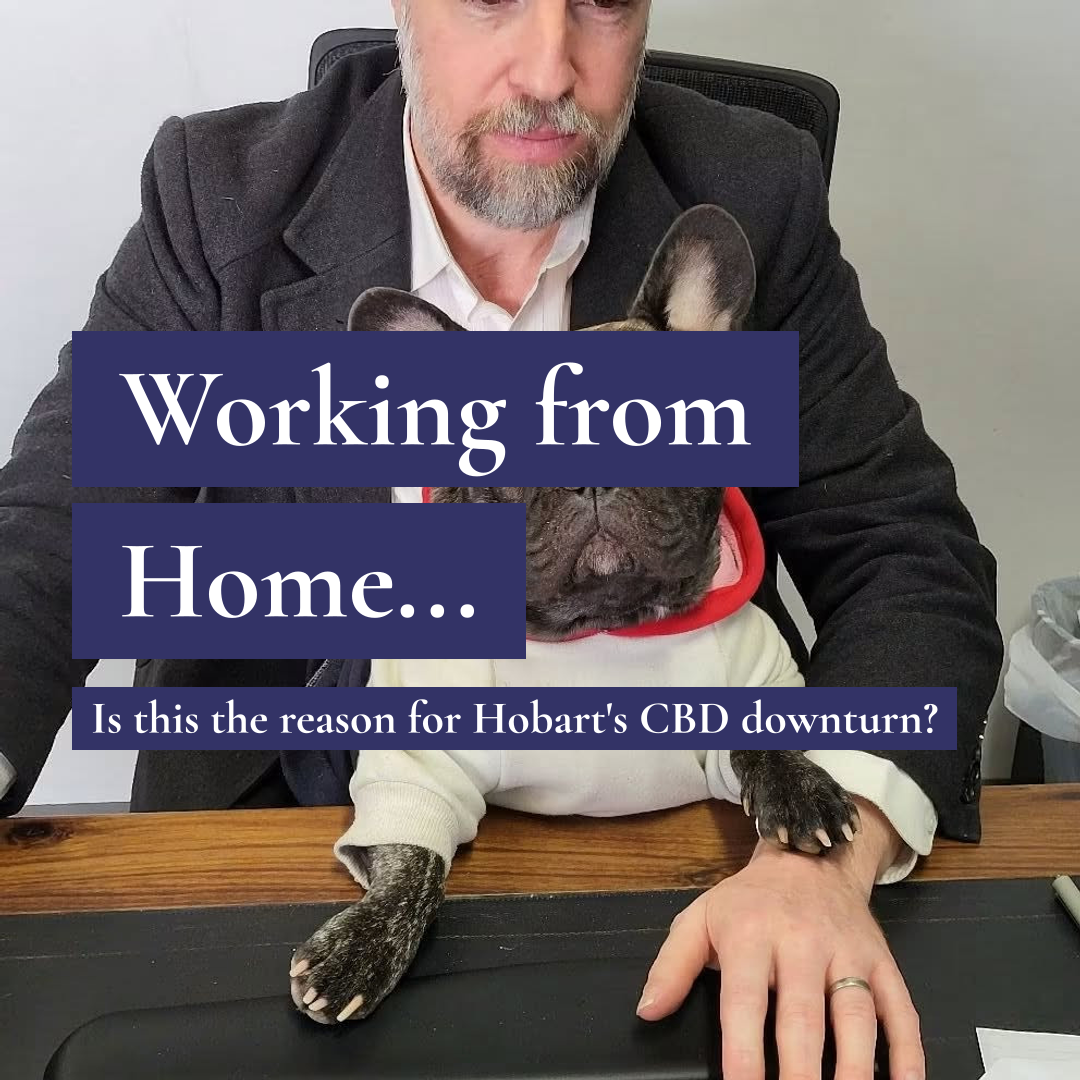
Working from home was a practical response to a global pandemic. But years later, as it becomes entrenched in our working culture, are we properly accounting for its wider economic and social consequences?
For Hobart, where government employment underpins a significant portion of our city economy, this conversation is overdue.
Roy Morgan research published in 2025 found that 51 per cent of Hobart CBD employees worked from home at least occasionally. Nationally, that figure was 56 per cent across public administration and defence.
The economic implications deserve serious attention.
Imagine 5,000 city workers staying home two days a week. If each would ordinarily spend $15 a day on coffee, lunch, shopping or other purchases, that represents $150,000 a week in potentially displaced CBD expenditure.
Over 46 working weeks, that amounts to $6.9 million.
This is an illustrative calculation, not a measured loss for Hobart. However, Australia's Productivity Commission has recognised that remote working can shift economic activity away from city centres.
Some spending may transfer to suburban businesses, but that provides little immediate comfort to CBD operators committed to commercial leases, rates, insurance and wages.
You cannot work from home as a barista, shop assistant, hairdresser or commercial cleaner. Yet your livelihood may depend on those who can.
The financial argument has changed
Reduced commuting expenses are frequently cited as a benefit of working from home.
However, Tasmania now offers free public bus and ferry travel until 30 June 2027, removing a direct commuting expense for workers who can access suitable services.
While travel time and accessibility remain legitimate considerations, the financial equation has changed.
Taxpayers are funding public transport initiatives while government workplace arrangements potentially reduce commuter numbers.
Are we adequately coordinating our transport, employment and economic development policies?
The human cost
A workplace provides more than somewhere to perform our duties. It can provide friendships, companionship, routine and belonging.
Research published in 'Science.Org' in 2026 identified increased social isolation among workers in occupations suited to remote working, extending beyond their working hours.
Although the mental health evidence remains mixed, isolation is a legitimate workplace wellbeing concern.
Consider someone living alone, spending eight hours working at home before spending their evening in the same room.
A Teams meeting is not necessarily a substitute for human companionship.
There are also important career development considerations.
Research published in the 'Quarterly Journal of Economics' found that software engineers working near colleagues received 18.3 per cent more feedback, with younger and less experienced employees particularly benefiting.
While this study focused on one profession, it raises broader questions about workplace mentoring.
Much of our professional development comes from observing experienced colleagues, overhearing conversations and asking spontaneous questions.
How do we develop tomorrow's leaders if we reduce their opportunities to learn directly from today's?
It's time to bring workers back
There are genuine benefits to workplace flexibility. A 2024 study published in 'Nature.com' found that hybrid working reduced employee departures by one-third without measurable harm to performance or promotion prospects.
However, government has responsibilities extending beyond those of an ordinary employer. Its decisions have economic and social consequences across the community.
I am calling on the Tasmanian Government to introduce a formal return-to-office policy from early 2027, establishing four days of workplace attendance each week as the standard for office-based public servants, with reasonable exemptions for disability, caring responsibilities and other legitimate circumstances.
Its effectiveness should be assessed against productivity, staff retention, wellbeing, mentoring, office accommodation costs and CBD economic activity.
This is not about questioning the dedication of public servants. It is about recognising the broader consequences of government workplace arrangements.
Small businesses should not be expected to carry the adjustment costs without government examining its own contribution.
A thriving capital city needs more than buildings, infrastructure and functioning computer networks.
It needs people.
It is time to reopen our office doors and bring our working community back together.